How Maple Got Here: The 2022 Stress Test
Maple launched into the 2021 bull market as a leader in uncollateralized institutional lending. The 2022 crypto collapse exposed its early weakness: bad debt from over-leveraged trading firms caught in the deleveraging spiral.
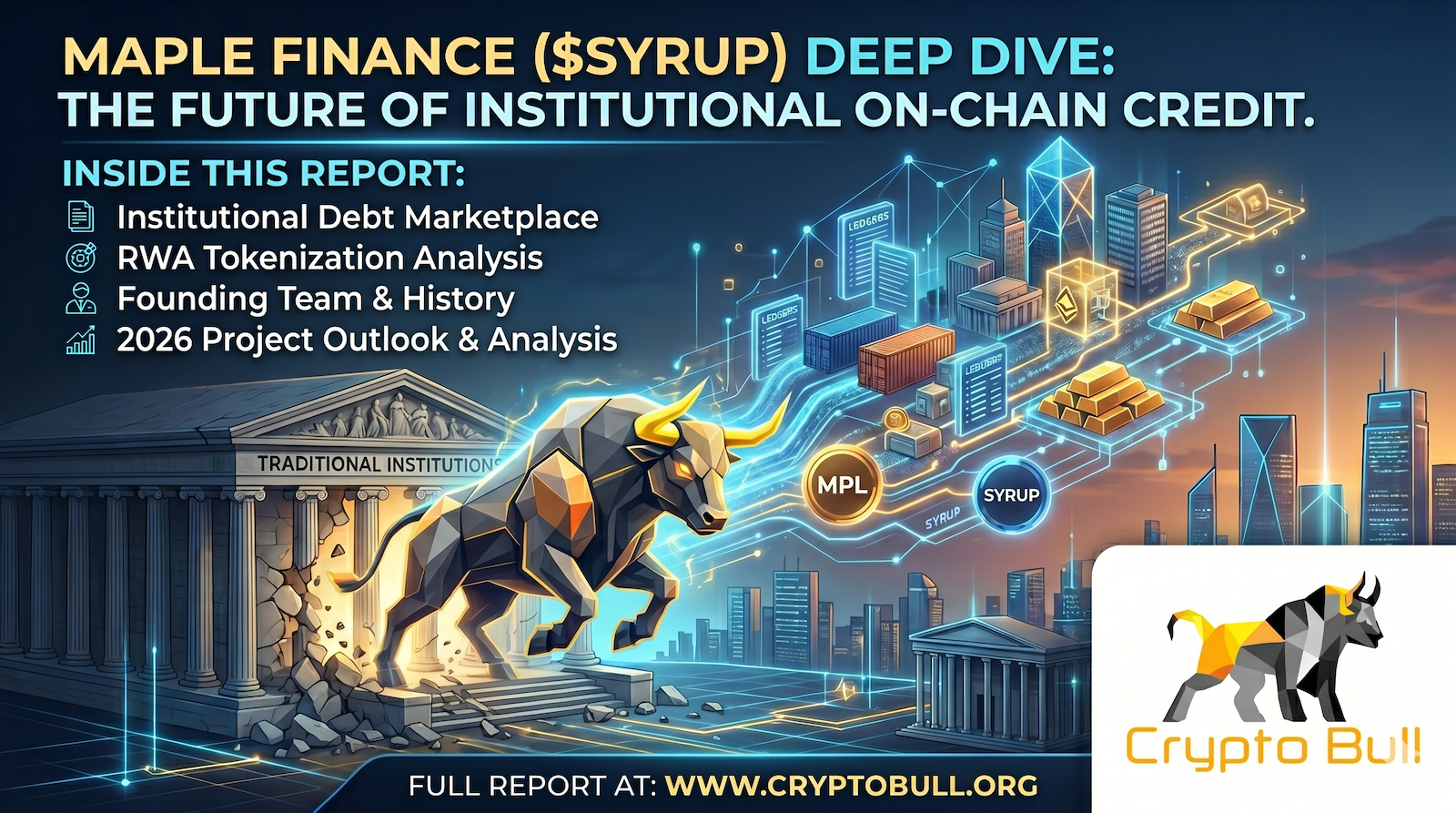
Rather than folding, Maple rebuilt. The team overhauled risk management, tightened underwriting standards, and pivoted aggressively into Real-World Assets (RWAs) and secured institutional lending. That pivot is what defines Maple today.
Current State (Early 2026)
Maple has emerged as one of the dominant protocols in the RWA and on-chain credit sector. Key developments:
Dual-token ecosystem: Legacy MPL (governance) and SYRUP (yield-bearing, protocol growth-linked)
Yield products: syrupUSDC and syrupUSDT — transparent, overcollateralized lending returns
Tier-1 integrations: Aave V3 (SYRUP listing targeted), Coinbase, Binance
Permissioned secured lending pools for sophisticated allocators
Market Opportunity
The macro narrative is clear: institutional capital is moving on-chain, and RWA tokenization is the bridge.
Maple's structural edge is capital efficiency. Traditional DeFi requires overcollateralization — borrowers lock up more than they borrow. Maple's model allows institutions to borrow against off-chain reputation, verifiable financial health, or specific secured collateral. That unlocks real credit flow into the digital economy in a way overcollateralized protocols simply cannot replicate.
The addressable market for tokenized assets is projected in the trillions. Maple is positioned at the intake valve.
$SYRUP Token Data Snapshot (April 2026)