What is Espresso ($ESP)?
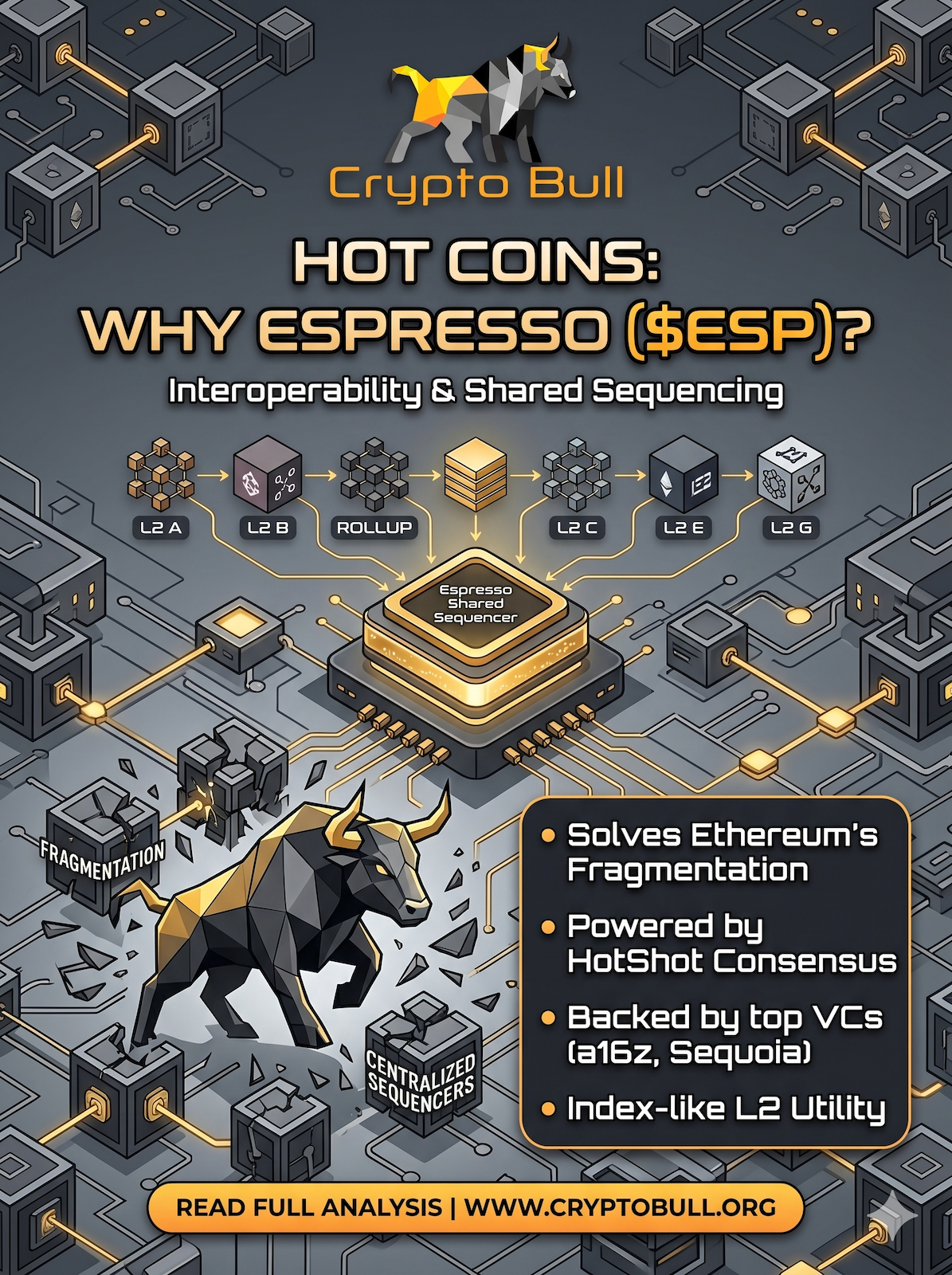
At its core, Espresso is a Shared Sequencing Layer.
In the current landscape, each L2 uses its own "sequencer" to order transactions. Most of these are centralized, creating a single point of failure. Espresso replaces these with a decentralized network that can handle sequencing for multiple rollups simultaneously.
Key Technical Highlights:
HotShot Consensus: A high-speed Proof-of-Stake protocol that allows for "fast finality"—confirming transactions in seconds rather than waiting for the Ethereum mainnet.
Atomic Interoperability: Because Espresso sequences multiple chains at once, it enables "atomic" cross-chain actions. Imagine swapping a token on Chain A and receiving it on Chain B in a single, seamless transaction.
Backed by Giants: The project is supported by heavy hitters like a16z crypto, Sequoia, and Electric Capital, signaling deep institutional confidence.
The $ESP Tokenomics & Utility
The $ESP token is the fuel of the network. It serves three critical roles:
Staking: Validators must stake ESP to participate in the sequencing marketplace.
Protocol Fees: Rollups pay fees in ESP to access decentralized sequencing and data availability.
Governance: Token holders vote on network upgrades and the integration of new partner chains.
Why $ESP is Trending Right Now
As of 2026, $ESP has seen a surge in volume following major exchange integrations. While the market cap is still evolving, its role as a "utility provider" for all L2s gives it a unique value proposition—if the Layer 2 ecosystem grows, Espresso's necessity grows with it.
The CryptoBull Verdict
Bull Case: If Espresso becomes the industry standard for shared sequencing, it could capture a massive portion of the transaction fees currently fragmented across the L2 landscape.
Bear Case: Competition in the "interoperability" and "sequencing" space is fierce. Success depends on the adoption rate by major rollup providers like Base or ZK-Sync.